Quiet Space Heaters: Buying Guides, Comparisons & Calculators
Researched and reviewed by Dustin Sosko
Published: October 10, 2026
Choosing a quiet space heater starts with deciding how you want the warmth delivered. Do you want to avoid steady fan noise, warm up quickly while sitting nearby, or add a little heat to a small room?
Use this hub to find the guide that matches your situation. Explore bedroom buying advice, compare heater types, estimate electricity costs, or troubleshoot a heater you already own.
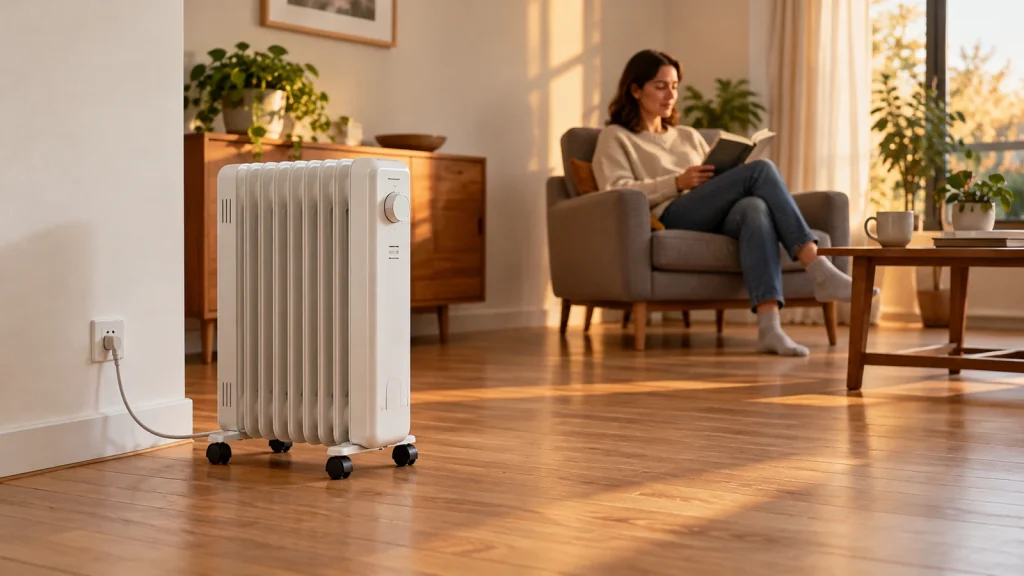
Need a starting point? Read our quiet space heaters for bedrooms and nursery safety guide.
QuietTechReport may earn a commission from qualifying purchases made through links in the buying guides below, at no additional cost to you.
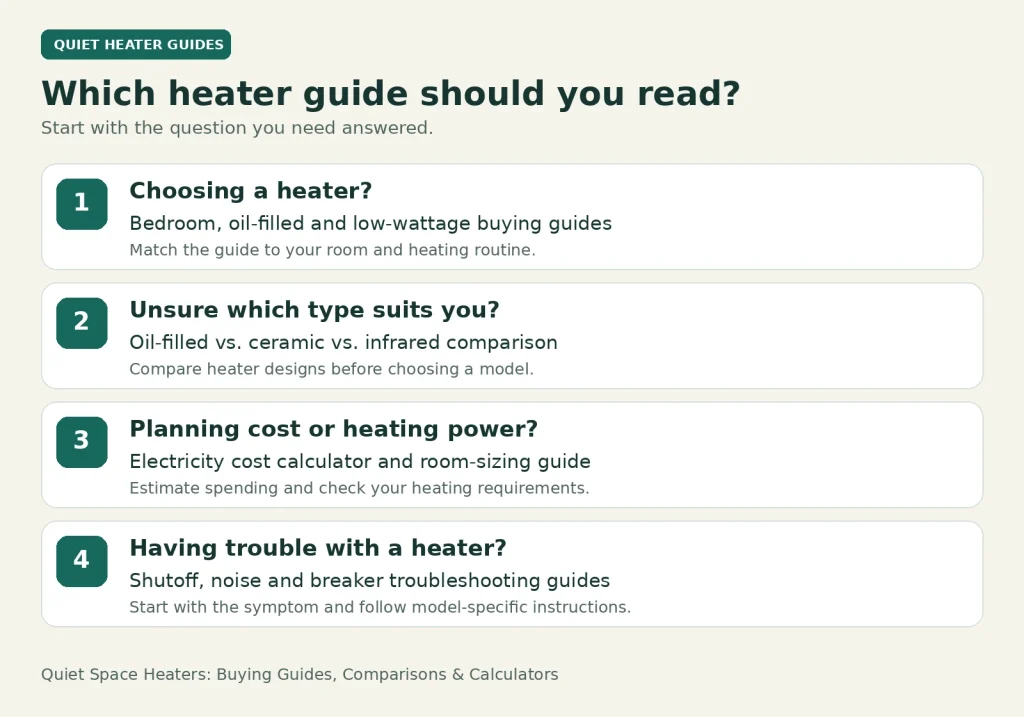
Find the Right Space Heater Guide
| Your main question | Start with |
|---|---|
| Which quieter heater suits a bedroom? | Quiet Space Heaters for Bedrooms and Nursery Safety |
| Which heater type suits my routine? | Oil-Filled vs. Ceramic vs. Infrared Heaters |
| Which fanless radiator should I consider? | Best Quiet Oil-Filled Heaters |
| Which options use less wattage? | Best Low-Wattage Space Heaters |
| How much will heating cost? | Space Heater Electricity Cost Calculator |
| How much heating power does my room need? | What Size Space Heater Do I Need? |
| Why does my heater stop operating? | Why Does My Space Heater Keep Shutting Off? |
| Why is my heater clicking, buzzing or rattling? | Why Is My Space Heater Making Noise? |
| Why does my heater trip the breaker? | Why Does My Space Heater Trip the Breaker? |
Quiet Space Heater Buying Guides
Quiet Space Heaters for Bedrooms and Nursery Safety
Start here when fan sound, illuminated controls, button beeps or limited floor space affect your choice.
The guide compares fanless and ceramic heating options, explains the limits of published noise claims, and covers placement and hot-surface concerns around children. It also distinguishes supervised bedroom heating from the separate need to keep a room comfortable during sleep.
Explore quiet bedroom heaters and nursery safety.
Best Quiet Oil-Filled Heaters
Choose this guide when avoiding continuous fan noise is your main priority.
Focus on radiator size, available heat settings, thermostat controls, portability and warm-up time. Fanless operation removes one source of sound, but clicks and thermal ticks still deserve attention.
Best for: Readers who want fanless warmth during longer, supervised heating sessions.
Best Low-Wattage Space Heaters
Choose this guide when you want modest supplemental warmth and a lower electrical draw.
Compare wattage settings, heater dimensions, intended use and heating limitations. A lower-wattage heater needs to match the task: warming a nearby seated person and maintaining the temperature of an entire cold room are different demands.
Best for: Small heating tasks where maximum output is unnecessary.
Compare our best quiet oil-filled radiator heaters by controls, heat settings, dimensions, mobility, and incidental noises.
Read our space heater sizing guide to estimate wattage by room size and understand the limits of a 1,500-watt heater.
Compare Space Heater Types
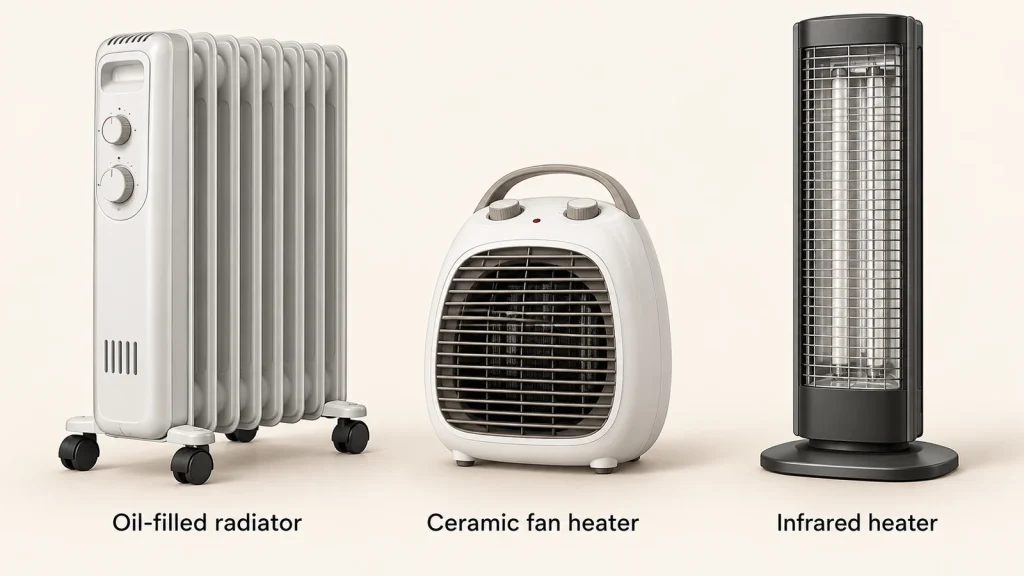
Oil-Filled vs. Ceramic vs. Infrared Heaters
Read this comparison before narrowing your choice to individual models.
The useful questions are how quickly you want to feel warmth, whether airflow bothers you, and whether you need heat directed toward one position or distributed around a room.
Use the comparison to weigh:
- Fanless operation versus fan-driven airflow.
- Warm-up time and the sensation of direct heat.
- Floor space, portability and placement requirements.
- Control sounds, thermostat cycling and maintenance.
Best for: Readers who understand their heating problem but have not chosen a heater type.
Compare oil-filled, ceramic, and infrared heaters for noise, warm-up behavior, and electricity costs.
Space Heater Calculators and Sizing Guides
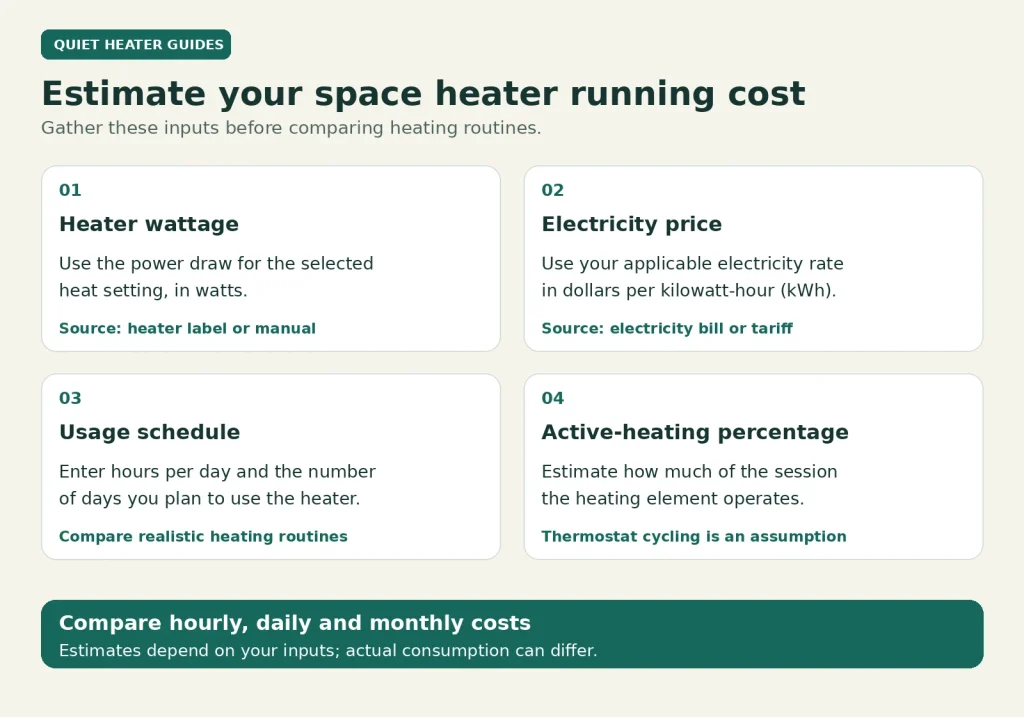
Space Heater Electricity Cost Calculator
Estimate the cost of a heating routine using the heater’s wattage, your electricity price, daily operating hours and number of usage days.
Compare two routines—for example, a shorter session at higher output and a longer session at lower output. Include an assumed active-heating percentage when estimating thermostat-controlled use.
Best for: Comparing hourly, daily and monthly operating costs before changing your heating routine.
A cycling estimate is an assumption, rather than a measurement of how your heater will behave in your room.
What Size Space Heater Do I Need?
Start here when you are unsure whether a heater can provide enough warmth.
Consider room area alongside ceiling height, insulation, drafts, outdoor conditions and the temperature increase you want. Also distinguish supplemental heating from heating a room that has no other adequate heat source.
Best for: Checking heating requirements before relying on a product’s advertised room coverage.
Space Heater Troubleshooting
Why Does My Space Heater Keep Shutting Off?
Use this guide to distinguish expected thermostat cycling from interruptions that need investigation.
Check the selected mode, timer, placement and model-specific instructions before assuming the heater has failed.
Best for: A heater that stops unexpectedly or repeatedly interrupts a heating session.
Why Is My Space Heater Making Noise?
Start with the sound you hear: clicking, ticking, humming, buzzing, rattling or fan noise.
Use the guide to identify when the sound occurs and which checks the manufacturer permits. Never bypass a safety device or keep operating a heater that shows signs of damage.
Best for: Understanding a new sound or deciding whether an existing noise needs attention.
Why Does My Space Heater Trip the Breaker?
Choose this guide when operating the heater interrupts power to the circuit.
Review the heater’s electrical requirements, other equipment sharing the circuit and warning signs that require professional attention.
Best for: Repeated breaker trips or uncertainty about the electrical load.
Safety Comes Before Quiet Operation
A quiet heater still needs safe placement and supervised use.
CPSC advises keeping portable heaters at least three feet from bedding, curtains, furniture and other combustible materials; plugging electric heaters directly into a wall outlet; and switching them off before sleeping. Do not use an extension cord or power strip.
Follow the model’s instructions, including any greater clearance requirements. A timer, thermostat or setting labeled “night mode” does not change the advice to turn a portable heater off before sleep.
For bedroom and nursery considerations, start with our quiet bedroom heater guide.
Explore More Quiet Home Appliances
Visit our Quiet Home Appliances hub for guides covering cooling, air quality, cleaning and other household needs.