Quiet Inverter Generators: Reviews, Comparisons & Guides
Researched and reviewed by Dustin Sosko
Published: September 21, 2026
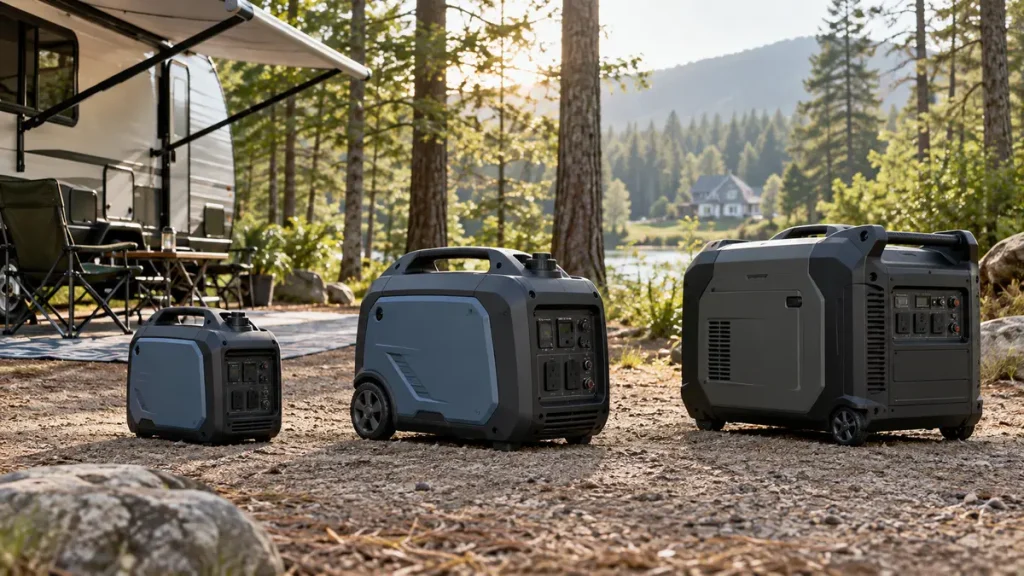
Quiet inverter generators can supply portable electricity without the harsh, constant engine speed associated with many conventional open-frame generators. Their enclosed housings and ability to adjust engine speed to electrical demand often make them a better fit for campgrounds, RVs, tailgating and residential backup power where sound matters.
Quiet does not mean silent, however. A generator that sounds restrained while charging a battery may become substantially louder when an air-conditioner compressor starts or household demand rises. Published decibel claims may also use different loads, distances and test conditions, so the smallest number on a product page is not enough to identify the best generator.
Use this hub to compare generators by output, fuel and application; review individual models and direct product matchups; calculate wattage, noise and runtime; and learn how to operate a generator more safely. If you are not sure whether you need a fuel-powered generator at all, begin with our comparison of an inverter generator and a portable power station.
Affiliate disclosure: QuietTechReport may earn a commission from qualifying purchases made through links on the guides below, at no additional cost to you.
Start Here
Best Quiet Inverter Generators
Start with the main comparison if you want a shortlist spanning compact camping generators, lightweight portable models, RV-ready machines and high-output home-backup options. It explains why the quietest choice must still provide enough continuous power and motor-starting capacity for the intended load.
RV Generator Wattage Calculator
Select the RV appliances you expect to operate and estimate the continuous wattage plus the largest additional startup demand. This is the best first step before choosing between a lightweight generator, a 3,000-watt-class model or a larger RV-ready machine.
Inverter Generator Noise-Level Chart
Compare manufacturer-published generator noise ratings while learning how load, test distance and measurement conditions affect the numbers. The chart helps prevent an “as low as” claim from being mistaken for a full-load sound rating.
Quiet Inverter Generator vs. Portable Power Station
Compare engine-driven generators with battery power stations for noise, indoor use, runtime, recharging, fuel storage, maintenance and extended outages. A battery station can be more convenient for light indoor and overnight loads, while a generator may be better suited to prolonged high demand when fuel is available.
Best Quiet Inverter Generators by Need
Generator categories overlap, but the right buying guide depends on the load, fuel supply and lifting requirements that matter most to you. Use the broad comparison for an overview or go directly to the guide that matches your application.
Best Quiet Inverter Generators for Home Backup
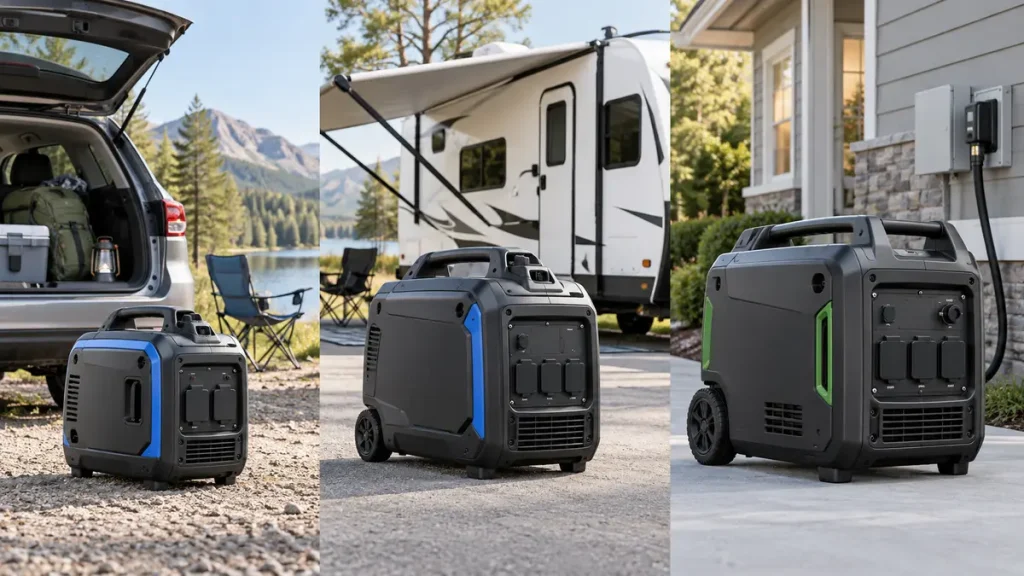
Compare higher-output inverter generators for refrigerators, pumps, lights, electronics and selected household circuits. The guide covers usable output, 120/240-volt capability, transfer equipment, fuel choices, noise and the limits of portable backup power.
Best Quiet Inverter Generators for RV Camping
Compare RV-ready generators based on starting and running output, noise evidence, weight, runtime, fuel, electrical connections and air-conditioner compatibility. This is the primary roundup for readers who want one generator for an RV or travel trailer.
Best Quiet 2,000–2,500W Inverter Generators for Camping
Find compact generators for battery charging, electronics, lighting, small appliances and carefully planned camping loads. These models emphasize low carrying weight and manageable sound rather than running a typical RV air conditioner with generous startup headroom.
Best Quiet 4,500-Watt Inverter Generators for RV Air Conditioners
Compare higher-output, RV-ready generators for 13,500- and 15,000-BTU air conditioners. The guide focuses on compressor startup, continuous output, 30-amp RV connections, propane derating and the portability tradeoffs that come with a larger machine.
Best Lightweight Quiet Inverter Generators Under 50 Pounds
Compare compact models that are easier to lift into a vehicle, move around a campsite and place in storage. Weight can be as important as published noise when the generator must be handled by one person.
Choose a Fuel Type
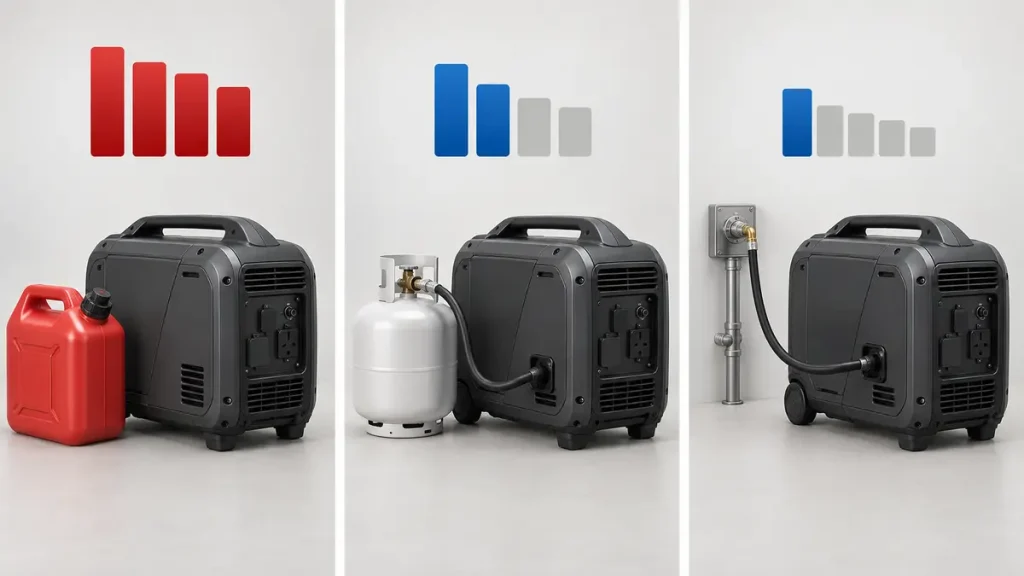
Fuel affects available wattage, storage, runtime, starting convenience and maintenance. Dual- and tri-fuel generators offer flexibility, but their output is normally lower on propane or natural gas than on gasoline.
Best Quiet Dual-Fuel Inverter Generators
Compare inverter generators that can operate on gasoline or propane. Dual-fuel capability is useful for RV owners and emergency planning, especially when clean-storing propane is already available, but buyers should size the generator using its propane output if that is the fuel they intend to use.
Best Quiet Tri-Fuel Inverter Generators
Compare high-output generators capable of operating on gasoline, propane or a compatible natural-gas supply. The guide explains fuel-specific output, home-backup connections, portability, sound claims and when the convenience of three fuels justifies the additional size and cost.
Are Propane Generators Quieter Than Gasoline Generators?
Learn how gasoline and propane operation differ in sound, output, fuel storage, runtime and maintenance. Fuel type can influence engine behavior, but generator design, electrical load and test conditions usually matter more than a simple gasoline-versus-propane label.
How Long Will a Generator Run on a 20-Pound Propane Tank?
Estimate propane runtime using generator size, electrical load and realistic usable fuel capacity. This guide is especially useful when planning an RV trip, overnight campsite use or an outage around a limited number of cylinders.
Honda EU3200i Reviews and Guides
The Honda EU3200i occupies an unusual position between lightweight 2,000-watt models and heavier 4,500-watt RV generators. These guides examine its noise, portability, usable output and closest Honda alternative.
Honda EU3200i Review
Evaluate the EU3200i’s published noise, output, fuel economy, 59.1-pound weight, features and premium price. The review explains where its combination of portability and power is especially useful—and where a larger RV-ready generator may provide more comfortable capacity.
Honda EU3200i vs. EU3000iS
Compare the lighter, fuel-injected EU3200i with the heavier EU3000iS and its larger fuel tank, longer runtime and electric starting. The better choice depends on whether carrying weight or extended stationary operation matters more.
What Can a Honda EU3200i Run?
Review realistic combinations of RV appliances and household backup loads within the generator’s continuous output. The guide separates normal running demand from short compressor and motor-starting surges.
Can a Honda EU3200i Run a 13,500 BTU RV Air Conditioner?
See when the EU3200i may start and operate a 13,500-BTU RV air conditioner and how elevation, temperature, other active loads and a correctly selected soft starter affect the result.
Direct Generator Comparisons
Product specifications become more useful when competing generators are examined side by side. These comparisons focus on the differences that can change ownership: fuel-specific output, sound claims, starting systems, weight, runtime, outlets and RV compatibility.
Westinghouse iGen5000DFc vs. Champion 4500
Compare two RV-ready dual-fuel generators based on gasoline and propane output, published noise, runtime, remote starting, weight and electrical connections.
Champion 2500 Dual Fuel vs. Westinghouse iGen2550DFc
Compare two lightweight dual-fuel generators for camping, charging and smaller portable loads. This matchup is most relevant when one-person portability matters more than air-conditioner capacity.
Westinghouse iGen5000DFc vs. WEN DF480iX
Compare two enclosed dual-fuel generators for RV air conditioning, emergency power and quieter high-output operation. The guide examines output, receptacles, starting methods, runtime, portability and safety features.
RV Air-Conditioner and Campsite Planning
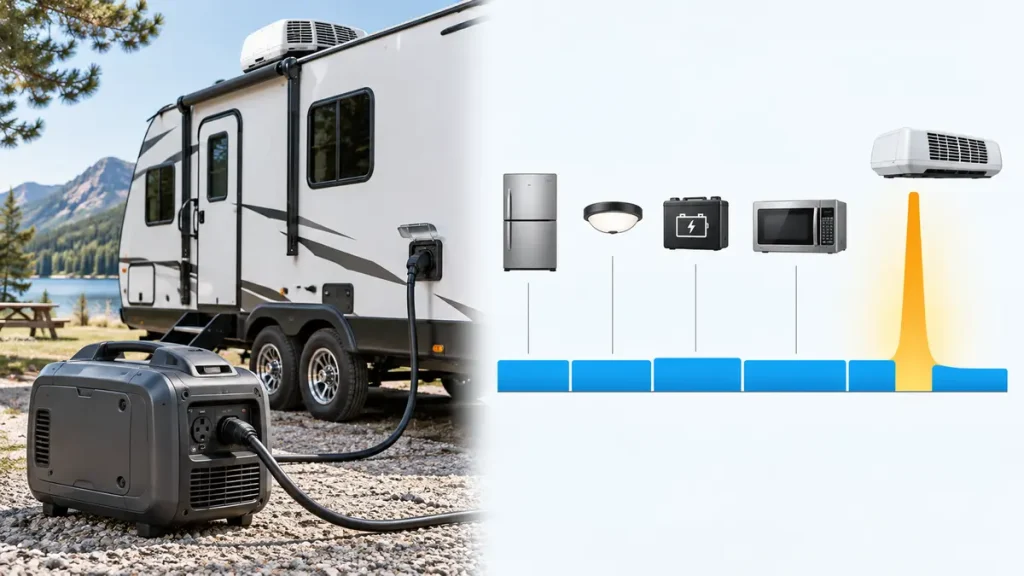
An RV air conditioner can create a brief startup demand far above its normal running wattage. Generator size, elevation, fuel, outdoor temperature, converter charging and other active loads can all determine whether the compressor starts reliably.
What Size Generator Do You Need for an RV Air Conditioner?
Compare practical generator requirements for 13,500- and 15,000-BTU RV air conditioners. The guide explains why the correct answer depends on measured or documented startup demand rather than BTU capacity alone.
Does an RV Air Conditioner Need a Soft Start?
Learn how a correctly matched soft-start device can reduce compressor startup demand, when it may improve generator compatibility and why it should not be treated as permission to undersize the generator.
Quiet Campsite Generator Planner
Combine electrical demand, published generator noise, distance, fuel runtime and safe placement in one printable campsite plan. Use it after identifying a likely generator size to evaluate how that machine may fit the actual campsite.
RV Generator Wattage Calculator
Estimate the running load and largest additional startup demand from the RV appliances you plan to operate. Allow additional headroom for altitude, propane operation and unusually hot conditions rather than treating the result as a guaranteed minimum.
Generator Size, Parallel Operation and Power Strategy
Buying one large generator is not the only way to obtain more power. Two compatible smaller machines may provide easier lifting and redundancy, but the cost, total sound and connection requirements can outweigh those advantages.
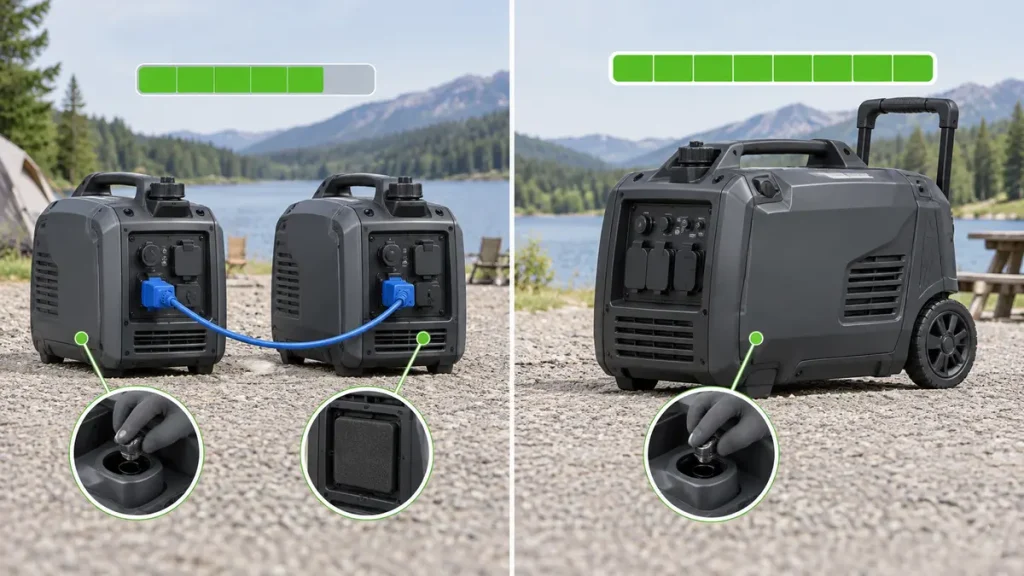
Can You Parallel Two Inverter Generators?
Learn how generator compatibility, manufacturer-approved parallel equipment, outlet ratings and combined wattage affect a parallel setup. Similar-looking parallel ports do not guarantee that two generators can be connected safely.
Two Small Inverter Generators vs. One Large Generator
Compare lifting weight, redundancy, fuel use, sound, maintenance, cost and usable outlet capacity before choosing a single high-output generator or a compatible parallel pair.
Quiet Inverter Generator vs. Portable Power Station
Decide whether quiet stored battery power, long fuel-supported operation or a hybrid approach better fits your outage or camping plan. Some users operate essential indoor loads from a power station and run a safely placed outdoor generator only when larger loads or battery recharging require it.
Understand and Reduce Generator Noise
Generator sound changes with engine speed, electrical load, distance, exhaust direction and nearby reflective surfaces. Published ratings are useful only when their test conditions are understood.
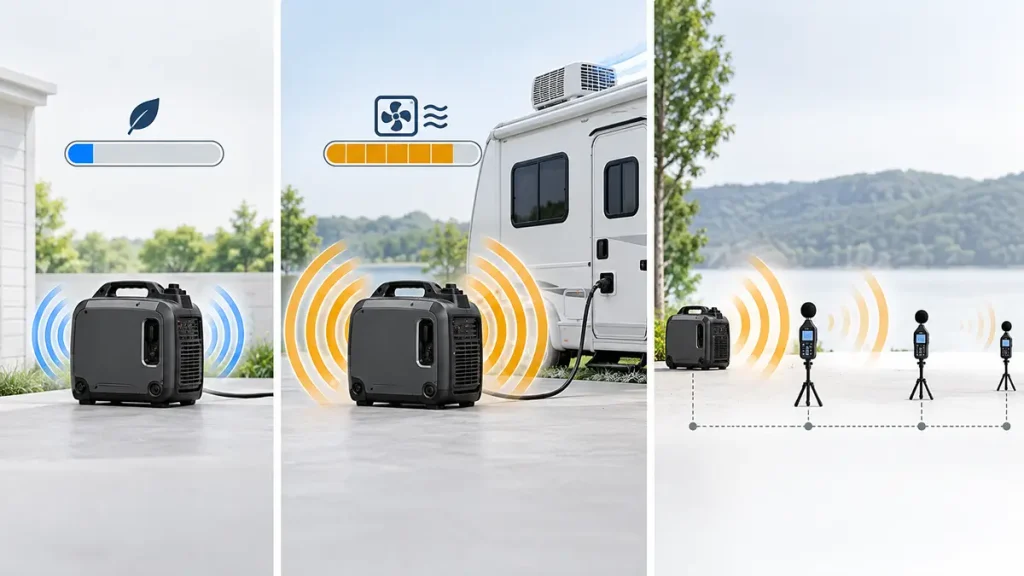
Generator Noise-at-a-Distance Calculator
Enter a published sound rating and its reference distance to estimate the level farther away. The calculator can also estimate the combined sound level from two generators, which is useful when evaluating a parallel setup.
Inverter Generator Noise-Level Chart
Compare published sound figures and learn why quarter-load, economy-mode and “as low as” claims should not be treated as directly comparable full-load results.
Inverter vs. Conventional Generators: Which Is Quieter?
Understand how variable engine speed, enclosure design, electrical demand and generator architecture affect the sound of inverter and conventional models.
Why Does an Inverter Generator Get Louder Under Load?
Learn why air conditioners, refrigerators, pumps, battery chargers and other demanding equipment cause generator speed and sound to rise—and why a low-load rating cannot predict every operating condition.
How to Make a Generator Quieter Safely
Reduce perceived noise through safe distance, exhaust orientation, vibration control, thoughtful placement and sensible load management. Noise reduction must never block cooling airflow, trap exhaust or move a generator too close to an occupied structure.
Safety and Overnight Operation
Every combustion generator produces carbon monoxide, including models marketed as quiet, enclosed or RV-ready. Low noise can make a running generator easier to forget; it does not make indoor or enclosed operation safe.
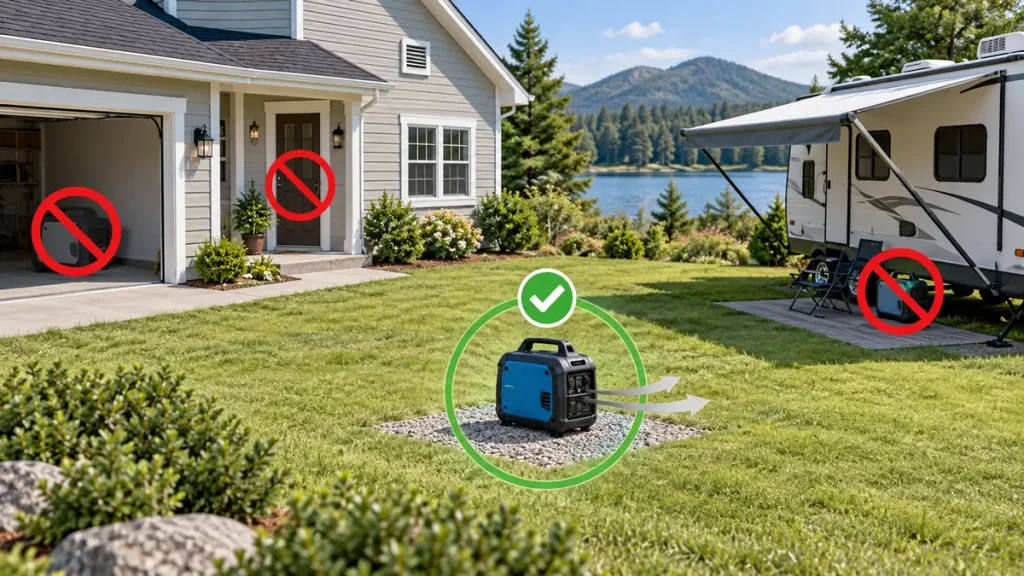
Can You Run an Inverter Generator Overnight Safely?
Review carbon-monoxide precautions, outdoor placement, exhaust direction, campground restrictions, weather exposure, fuel capacity and quieter overnight alternatives before planning unattended or sleeping-hour operation.
Core generator safety rules
- Operate a portable generator outdoors only and follow the manufacturer’s required clearances.
- Keep it away from doors, windows, vents, garages, crawl spaces and other paths into occupied areas.
- Direct exhaust away from people and buildings.
- Maintain working carbon-monoxide alarms inside the home or RV.
- Keep the generator dry without enclosing it or restricting cooling airflow.
- Never connect a generator to household wiring through a wall outlet or homemade double-ended cord.
- Use a professionally installed transfer switch or approved interlock for household circuits.
- Allow the engine to cool before refueling, and store fuel in approved containers.
Always follow the current manual for the exact generator and applicable local requirements. A built-in carbon-monoxide shutoff is a valuable additional safeguard, not permission to operate the generator in an unsafe location.
Fuel Runtime, Altitude and Real-World Output
Nameplate output does not remain equally available under every condition. Propane commonly reduces output compared with gasoline, higher elevation reduces engine performance, and increasing electrical load generally raises both fuel consumption and sound.
How Long Will a Generator Run on a 20-Pound Propane Tank?
Estimate runtime from generator size, load and usable propane. Treat the result as a planning estimate because temperature, regulator performance, engine efficiency and tank fill can change actual operation.
Generator Fuel Needed for an Outage
Enter your model’s gasoline consumption or published tank runtime to plan multiday fuel and refills.
Generator Power Loss at Altitude Calculator and Guide
Estimate how elevation may reduce usable generator output and how much additional capacity may be needed. This is especially important when starting an RV air conditioner or another compressor near the generator’s limit.
Why Does an Inverter Generator Get Louder Under Load?
See how rising demand affects engine speed, cooling, fuel use and sound. Leaving reasonable headroom can help prevent a generator from operating continuously near its loudest and least efficient condition.
How to Choose a Quiet Inverter Generator
1. Calculate the required running and starting power
List the equipment that may operate at the same time and add its continuous wattage. Then identify the largest motor or compressor startup demand that could occur while those loads are running.
The basic planning relationship is:
Required starting capacity = simultaneous running watts + largest additional startup surge
Do not add every appliance’s starting wattage together unless they will genuinely start at the same moment. Use labels, manuals or credible manufacturer documentation for the exact equipment whenever possible. RV owners can begin with the RV generator wattage calculator.
2. Leave practical headroom
A generator should not be selected with its advertised maximum output exactly equal to your best-case estimate. Altitude, heat, propane use, appliance variation and simultaneous loads can reduce the margin. A generator that remains close to maximum output may also run louder and consume more fuel.
3. Compare noise claims in context
Look for the load percentage, test distance and operating mode attached to every decibel claim. A quarter-load result cannot predict sound while starting an air conditioner, and two figures measured at different distances are not directly comparable.
When the testing details are missing, treat the number as limited evidence rather than a controlled ranking. Use the generator noise-level chart to understand the published figures.
4. Choose fuel around real use
Gasoline often provides the generator’s highest available output. Propane stores cleanly and may be convenient for RVs or occasional emergency use. Natural gas can support longer home-backup operation when a compatible supply is available, but it commonly provides the lowest output of the three fuels.
Size the generator using the output for the fuel you actually plan to use, not the largest gasoline number printed on the box.
5. Decide how portable it must be
A sub-50-pound generator may be carried by one person, but larger RV-ready models often require wheels, a ramp or two-person handling. Home-backup generators can weigh well over 100 pounds and may be portable only in the sense that they have wheels.
Check the complete weight, dimensions, handle design and the path between storage and the operating location before buying.
6. Confirm outlets and voltage
An RV owner may need a TT-30R receptacle, while household transfer equipment may require a 120/240-volt L14-30R or 14-50R connection. USB ports and standard 120-volt receptacles do not substitute for the correct high-current outlet.
Confirm the generator’s voltage, receptacle ratings and neutral configuration with the equipment it will supply. Household connections should be designed and installed by a qualified electrician.
7. Check runtime and refueling plans
Published runtime is commonly measured at a light load. Actual runtime decreases as demand rises. Tank capacity, fuel choice, economy mode, weather and refueling limitations all affect whether a generator can cover the intended period.
For propane use, estimate consumption with the 20-pound-tank runtime guide before assuming one cylinder will last through the night or an outage.
8. Evaluate safety and ownership features
Look for automatic carbon-monoxide shutdown, overload protection, low-oil shutdown, covered outlets, fuel shutoff, electric or remote starting and accessible maintenance points. These features do not replace safe placement, but they can improve everyday operation.
Also compare warranty terms, local service availability, replacement parts and the manual for the exact model under consideration.
Frequently Asked Questions
What is the quietest inverter generator?
There is no single quietest generator under every condition. Published ratings use different loads, distances and methods, and generator sound increases as electrical demand rises. A transparent noise range measured from low to rated load is more useful than an unexplained minimum figure. Choose within the output class you actually need, then compare documented sound evidence.
How many decibels is considered quiet for an inverter generator?
Many enclosed portable inverter generators advertise minimum or light-load figures in roughly the 50-to-60-dBA range, but that does not mean they remain there at high output. Test distance, load and surroundings materially affect the reading. Use decibel numbers only with their stated conditions.
Can a 2,000-watt inverter generator run an RV air conditioner?
Sometimes, but it should not be assumed. A typical RV air conditioner may have a startup demand that exceeds the generator’s available surge capacity, particularly at elevation, in high heat or while other loads are active. A correctly selected soft starter may help, but a larger generator usually provides more reliable headroom.
Is a dual-fuel generator quieter on propane?
Not necessarily by a meaningful or consistently documented amount. The generator may behave somewhat differently on propane, but electrical load, engine speed, enclosure and measurement conditions often matter more. Propane also normally reduces available output, which can cause a generator to operate at a higher percentage of capacity for the same load.
Are inverter generators safe for electronics?
Inverter generators are designed to produce stable power suitable for many electronic devices, but buyers should still confirm the exact model’s specifications and the requirements of sensitive or medical equipment. Overloads, damaged cords, improper grounding or unsafe connections can create problems regardless of generator type.
Can an inverter generator power a house?
A sufficiently large 120/240-volt inverter generator can supply selected household circuits through professionally installed transfer equipment. It may not run every appliance simultaneously, particularly central air conditioning, electric heat, water heating, cooking and laundry loads. Calculate both continuous demand and motor-starting requirements before choosing a backup system.
Can I run an inverter generator in a garage if the door is open?
No. A portable generator must not be operated in a garage, house, basement, shed, crawl space or other enclosed or partly enclosed location. Opening doors or windows does not prevent dangerous carbon-monoxide accumulation. Operate it outdoors according to the manufacturer’s instructions and maintain working indoor carbon-monoxide alarms.
Can I make a generator quieter with an enclosure?
Only a properly engineered solution can manage sound without trapping exhaust or restricting the cooling air required by the engine and alternator. Improvised boxes can create carbon-monoxide, fire and overheating hazards. Prioritize safe distance, exhaust direction, vibration isolation and load management, and follow the guidance in How to Make a Generator Quieter Safely.
Is it better to parallel two small generators or buy one large generator?
Two compatible small generators may be easier to lift and provide redundancy, while one large generator is usually simpler to connect, fuel and maintain. A parallel pair can cost more and may produce more combined sound sources. Compare the required outlet capacity and manufacturer-approved parallel equipment before deciding.
Match the Generator to the Load
Start with the equipment you need to operate, not the largest advertised wattage or the lowest published decibel number. Calculate simultaneous running demand and startup surge, decide which fuel you will actually use, allow for elevation and operating conditions, and then compare sound, portability, runtime, outlets and support within the correct output class.
For a broad product shortlist, visit Best Quiet Inverter Generators. RV owners should calculate their likely demand with the RV Generator Wattage Calculator before choosing a size.