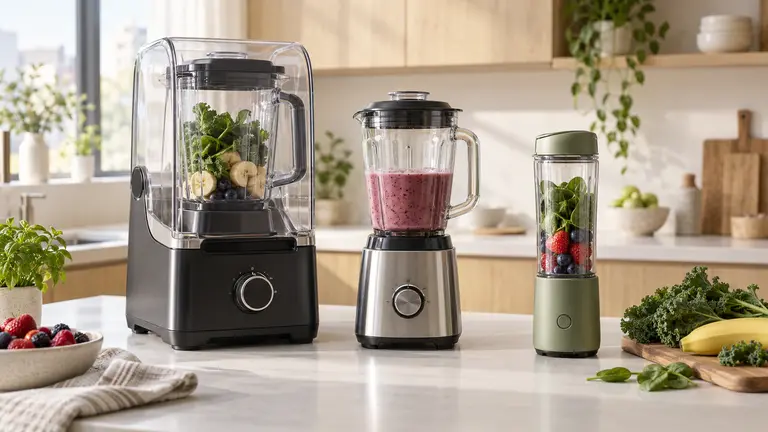
Quiet Blenders: Buying Guides for Less-Disruptive Blending
Researched and reviewed by Dustin Sosko
Published: September 20, 2026
Blenders are among the hardest kitchen appliances to make genuinely quiet. A powerful motor, fast-moving blades, hard ingredients and a rigid countertop can combine to create a short but intense burst of noise. Some models reduce that disruption with a sound enclosure, a well-isolated motor or a stable base. Others are quieter mainly because they are smaller and less powerful.
QuietTechReport’s blender guides help you compare those tradeoffs instead of treating every product labeled “quiet” as equally suitable. Start with the guide that matches where, when and how you blend.
QuietTechReport may earn a commission from qualifying purchases made through links in the guides below, at no additional cost to you.
Find the Right Quiet Blender Guide
| If you need… | Start with… | Why this guide fits |
|---|---|---|
| A full-size blender for a rental or shared-wall home | Best Quiet Blenders for Apartments | Focuses on sound enclosures, vibration control, counter space and apartment-friendly operation. |
| A blender for breakfast while others are sleeping | Best Quiet Blender for Morning Smoothies | Prioritizes short blend cycles, smoothie performance and less-disruptive early-morning use. |
| A lower-priced countertop blender | Best Quiet Blender Under $100 | Compares realistic budget options and explains the performance compromises below $100. |
| A compact cordless blender for one serving | Best Quiet Portable Blenders | Covers rechargeable models for protein shakes, soft fruit, travel and limited storage. |
| A sound-enclosed machine for frequent business use | Best Quiet Commercial Blenders | Evaluates higher-duty machines for cafés, bars, restaurants and demanding home kitchens. |
Quiet Blender Buying Guides
Best Quiet Blenders for Apartments
Apartment kitchens often share walls, cabinets or floors with bedrooms and neighboring units. That makes both airborne sound and vibration important. A machine can have a relatively controlled motor tone yet still transmit an irritating buzz through a hard countertop.
The quiet blender guide for apartments compares full-size models based on noise evidence, sound containment, stability, jar capacity, cabinet clearance and blending performance. It is the best starting point if you want one primary blender for a smaller home.
Best for: Renters, apartment residents, roommates and households with shared sleeping spaces.
Best Quiet Blender for Morning Smoothies
Early-morning blending creates a different problem from ordinary daytime use. Background sound is lower, nearby sleepers are more sensitive to sudden noise, and a long blend cycle can be more disruptive than a brief high-powered burst.
Our quiet morning-smoothie blender guide compares models for frozen fruit, leafy greens and common breakfast recipes while considering operating instructions, countertop dimensions, warranties and available noise evidence.
Best for: Early risers, parents, couples with different schedules and anyone preparing daily smoothies.
Best Quiet Blender Under $100
A limited budget does not automatically mean accepting the loudest blender available. However, inexpensive models rarely include the heavy sound enclosures found on premium machines. The practical goal is usually controlled noise, a stable base and enough power to finish ordinary recipes without an unnecessarily long run time.
See the best quiet blenders under $100 for affordable models suited to smoothies and everyday kitchen tasks, along with the limitations to expect when blending ice, fibrous greens or thick mixtures.
Best for: Students, first apartments, occasional smoothie makers and budget-conscious households.
Best Quiet Portable Blenders
Portable blenders often produce less peak noise than full-size countertop machines because they use smaller battery-powered motors. They also have smaller jars and less ability to process hard ice, large frozen pieces or fibrous ingredients.
Our quiet portable blender comparison focuses on cordless convenience, single-serving capacity, charging, cleaning and realistic blending ability. A portable model can be a sensible way to reduce disruption when a shake or soft-fruit smoothie is all you need.
Best for: Travel, offices, dorms, gyms, protein shakes and one-person servings.
Best Quiet Commercial Blenders
Commercial machines may run dozens or hundreds of cycles during a working day. In that setting, noise affects employees, customers and the overall atmosphere of the space. A substantial enclosure can matter more than a small difference in a published decibel figure.
The quiet commercial blender guide covers sound-enclosed machines for cafés, bars and smoothie shops, with attention to capacity, controls, workflow and durability. It is also relevant to home users who blend frequently and are willing to pay for commercial-style sound containment.
Best for: Coffee shops, smoothie bars, restaurants, hospitality spaces and high-volume home kitchens.
What Makes One Blender Quieter Than Another?
No powerful countertop blender is silent. The sound you hear is produced by several sources at once:
- The electric motor and its cooling fan
- Air turbulence around the blades
- Ice and frozen ingredients striking the jar
- Vibration traveling through the base and countertop
- Rattling lids, jars or removable components
- Reflections from walls, cabinets, tile and backsplashes
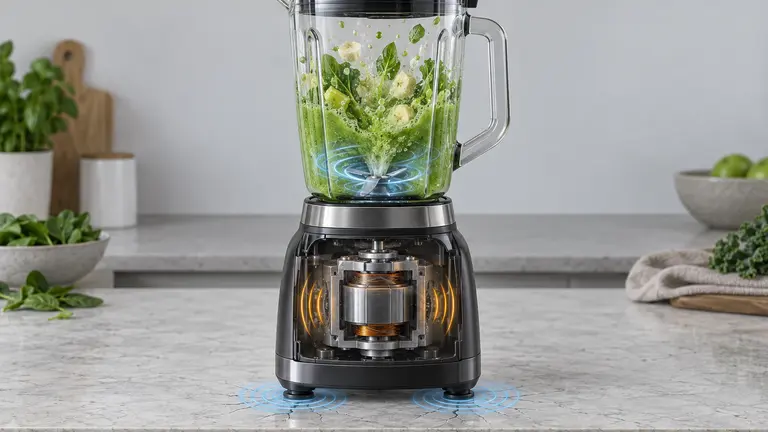
This is why wattage alone cannot predict noise. A high-powered blender may finish a difficult recipe quickly, while a weaker machine may need to run much longer. Likewise, two machines with similar maximum readings can sound different because one has a sharper motor tone or more ingredient-impact noise.
For a broader explanation of appliance sound, read Understanding Decibels: How Loud Is Too Loud for Home Appliances?.
Sound Enclosure, Quiet Motor or Smaller Blender?
| Design approach | Main advantage | Main limitation | Usually best for |
|---|---|---|---|
| Full sound enclosure | Contains motor, blade and ingredient-impact noise | Adds cost, height and counter space | Frequent blending and noise-sensitive homes |
| Conventional blender with controlled noise | Easier access, more choices and often lower cost | Still clearly audible at higher speeds | General daytime kitchen use |
| Portable battery blender | Lower power can mean lower peak noise | Small servings and limited ice-crushing ability | Shakes, soft fruit and travel |
| Commercial enclosed blender | Strong containment and high-duty operation | Expensive and potentially oversized for home use | Businesses and very frequent blending |
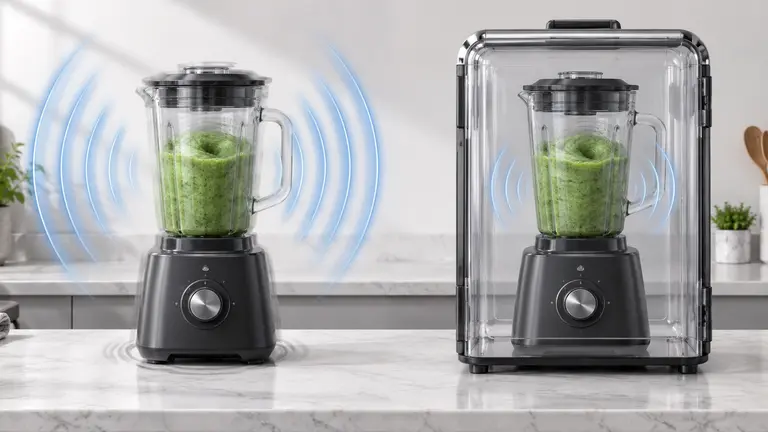
A sound enclosure is normally the most direct noise-control feature because it surrounds the jar, where much of the harsh sound originates. A model marketed as having a quiet motor may still produce substantial blade and ingredient noise. Portable units can be less disruptive, but their lower output is a genuine performance tradeoff rather than a free reduction in noise.
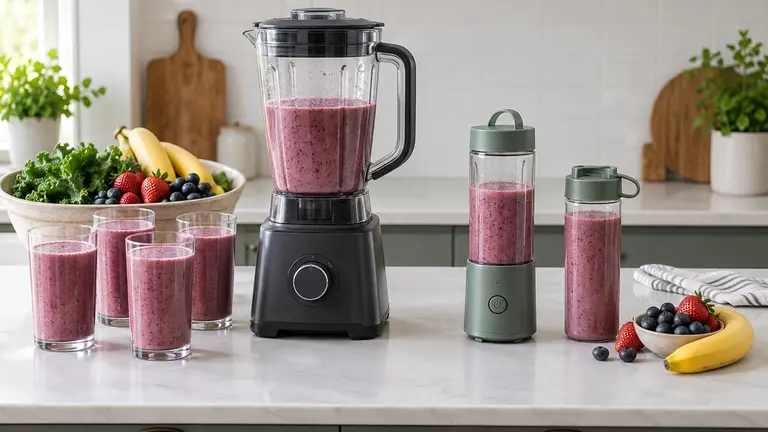
How to Compare Blender Noise Claims
Blender decibel figures are only useful when the test conditions are reasonably clear. Results can change with the measuring distance, room surfaces, speed, ingredients, jar, enclosure position and sound meter settings.
When comparing models:
- Prefer measurements produced under the same test method.
- Check whether the reading was taken at maximum speed or during a specific recipe.
- Confirm whether a sound enclosure was open or closed.
- Treat a one- or two-decibel difference cautiously when testing conditions differ.
- Consider total operating time as well as peak volume.
- Do not assume a manufacturer’s “quiet” label is a standardized rating.
Decibels use a logarithmic scale, so the numbers do not behave like ordinary percentages. Even so, a numerical result does not fully describe whether a blender has a smooth hum, high-pitched whine, intermittent pulse or sharp ice-impact sound.
Choose by Kitchen and Routine
Apartments and shared walls
Prioritize vibration isolation, a stable base and a location away from shared walls. An enclosed full-size model is the strongest option when you regularly blend hard or frozen ingredients. If your recipes are simple and single-serving, a portable model may be enough.
For more ways to manage sound in compact homes, see Quiet Tech for Apartments, Dorms and Studios.
Early mornings and sleeping households
Look for short automatic programs, variable speed control and a jar that matches the serving size. Preparing ingredients the night before and avoiding rock-hard chunks can reduce the time the motor must run.
Open-concept kitchens
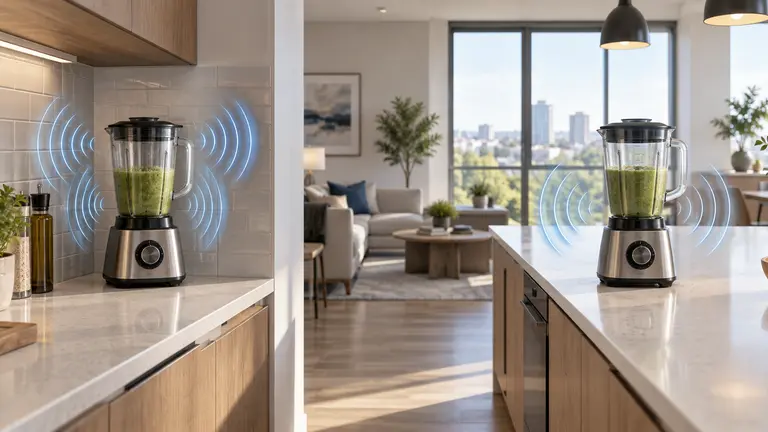
Open layouts allow blender noise to travel directly into dining and living areas. Sound-absorbing furnishings elsewhere in the room may soften reflections, but the blender still needs adequate ventilation and a stable surface. Our guide to designing a quiet open-concept kitchen explains how layout, materials and appliance placement work together.
Small kitchens and limited storage
Measure the full assembled height, including any enclosure, and compare it with the clearance below your cabinets. A large pitcher or sound shield that must be stored separately can erase the convenience of an otherwise suitable machine.
Cafés and high-volume use
Prioritize duty cycle, repeatable programs, enclosure durability, easy cleaning and replacement-part support. A household blender that seems adequate for occasional use may not be designed for continuous commercial demand.
How to Make a Blender Less Disruptive
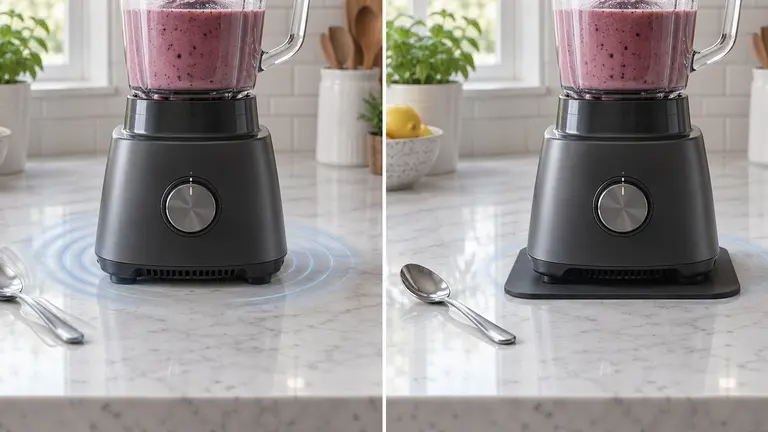
The blender itself matters most, but setup and technique can prevent avoidable noise:
- Place the machine on a flat, stable counter.
- Keep it away from corners and hard backsplashes that reflect sound.
- Move it away from walls shared with bedrooms or neighboring units.
- Use a thin, dense, non-slip appliance mat if it does not block ventilation.
- Add ingredients in the manufacturer’s recommended order.
- Cut large frozen ingredients into smaller pieces.
- Let rock-hard fruit soften briefly when the recipe allows.
- Begin at a lower speed and increase gradually if the manual recommends it.
- Use the shortest program that produces the texture you need.
- Check that the jar, lid and removable parts are seated correctly.
Do not wrap an operating blender in towels or place it inside a homemade sealed box. Soft material can obstruct airflow, and an unventilated enclosure can trap heat. Never defeat interlocks or operate the appliance in a way prohibited by its manual.
Frequently Asked Questions
Are any blenders actually quiet?
No powerful blender is truly quiet. Models with full sound enclosures can reduce the harshness and spread of the sound, while some conventional and portable blenders are less disruptive than average. “Quiet” should be understood as relative to comparable machines.
What is the best quiet blender for an apartment?
The answer depends on your recipes, budget, available counter space and schedule. Start with the apartment blender guide if you need full-size performance. Consider the portable blender guide for simple single-serving drinks.
Is a blender with a sound enclosure worth it?
It can be worthwhile when you blend frequently, operate the machine early, share walls, have sleeping children or are especially sensitive to sharp appliance noise. Occasional daytime users may prefer a smaller and less expensive conventional blender.
Are portable blenders quieter than countertop blenders?
They often produce less peak noise because they use smaller motors, but they also process smaller servings and may struggle with ice or dense frozen mixtures. Compare both sound and recipe capability before choosing.
Does a lower-wattage blender always make less noise?
No. Motor design, blade speed, jar shape, construction and vibration all matter. A low-powered blender may also need a longer cycle, increasing the total time the sound is present.
Can a rubber mat make a blender quieter?
A dense, stable rubber mat can reduce vibration transmitted into the counter. It cannot remove motor, blade or ingredient-impact noise. Make sure the mat does not cover vents or allow the blender to move during operation.
Is it safe to put a towel under or over a blender?
Do not cover an operating blender. A towel can block cooling vents or interfere with moving components. A towel underneath may also bunch, slide or make the base unstable. Use only a flat, non-slip support that preserves ventilation and follow the manufacturer’s instructions.
Start With the Guide That Matches Your Needs
For most full-size residential shoppers, the best quiet blenders for apartments is the broadest starting point. Choose the morning-smoothie guide if timing and breakfast performance matter most, or the under-$100 guide if price is the main constraint.
For smaller servings and travel, compare quiet portable blenders. Businesses and high-volume users should begin with the quiet commercial blender guide.